
Google Gemini 3.8 Flash is Fast, Specialized in Cybersecurity, and Amazing (APK Download)


Subscribe for Updates
I have been using Gemini extensively since last year and it has been the best helper tools in research and building. I just finished transferring everything to a completely self-hosted server for all my apps and websites. Gemini has also helped me tighten security for the server. Gemini 3.8 Flash has come right in time. Google also offers a new cybersecurity model (3.8 Flash Cyber) with frontier-level performance in vulnerability detection and automated patching.
Google just shipped its third Flash-tier model release in six weeks, and this one comes with a twist: alongside the general-purpose Gemini 3.8 Flash, the company is quietly rolling out a specialized sibling built almost entirely for defenders called Gemini 3.8 Flash Cyber.
If you’ve been tracking the pace of AI model releases in 2026, you already know things are moving fast. But even by this year’s standards, three Flash-tier releases in six weeks is aggressive.
This comes at a critical time, amid a sharp rise in malicious bot traffic and automated attacks across the web.
Let’s break down what’s actually new, why the “Cyber” variant matters more than it might first appear, and what this release tells us about where frontier AI is headed next.
Gemini 3.8 Flash
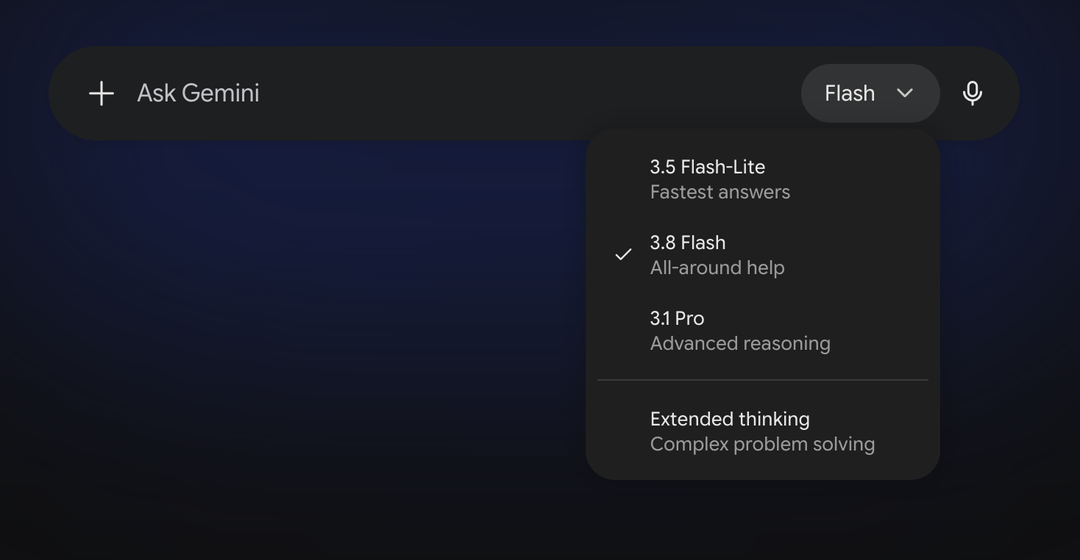
Gemini 3.8 Flash is positioned as Google’s best reasoning-and-coding model in the Flash line to date. It ships at the same introductory pricing as its predecessor, 3.7 Flash: $0.75 per million input tokens and $3.75 per million output tokens.
That pricing stability matters. In a market where frontier capability upgrades usually come with a cost premium, holding the price line while pushing performance is a deliberate signal. Google wants developers building agentic workflows and long-running coding tasks to treat capability upgrades as “free” from a budgeting standpoint, at least for now.
Google says, the model “Works Harder”
Google attributes gains to a design philosophy where the model exhibits greater diligence. Meaning, taking extra reasoning steps and calling tools iteratively when a task is complex, rather than settling for a fast, shallow answer.
At higher effort levels, the model can use significantly more tokens to maximize performance. For teams optimizing for raw compute efficiency, Google is giving you an escape hatch. That is, lower effort settings, or simply sticking with 3.7 Flash, which remains fully supported.
Instead of a single fixed “smartness” dial, we’re seeing effort-adjustable reasoning become a first-class API parameter.
Gemini 3.8 Flash Cyber: A Model Built to Defend
This is arguably the more consequential half of the announcement, and it deserves its own spotlight.
Gemini 3.8 Flash Cyber is a specialized variant trained on the same foundational core as 3.8 Flash, but tuned specifically for cybersecurity defense work. It’s not broadly available. However, access runs through Google’s new Fairwind Program, which is explicitly limited to trusted defenders: government cybersecurity authorities, critical infrastructure operators, and software maintainers.
Google says it deliberately prioritized automated patching capability over offensive exploitation skills when training this model, framing it as a direct attempt to tilt the balance of power toward defenders.
On CWE-Bench (an external benchmark run by Collinear), 3.8 Flash Cyber lands right on the Pareto frontier — a 47.2% pass@1 rate, just shy of a leading frontier model’s 47.8%, but at meaningfully lower cost.
Google is drawing a clear line between the two models’ safety postures. Standard 3.8 Flash ships with safeguards against misuse in CBRN (chemical, biological, radiological, nuclear) domains and cyber offense, aligned with Google’s Frontier Safety Framework. Flash Cyber, by contrast, ships with a more permissive set of cyber-specific mitigations — which is precisely why it’s gated behind the Fairwind vetting process rather than open to the public.
Separately, Google notes that the 3.8 generation has made measurable gains in prompt injection robustness, as measured by third-party evaluator Gray Swan — a detail worth watching as agentic AI systems increasingly operate autonomously across untrusted web content and tool calls.
Where to Access It
Rollout is broad and fairly immediate:
- Developers can build with 3.8 Flash in Google Antigravity, the Gemini API via Google AI Studio, Android Studio, or generate UIs through Stitch.
- Enterprises get access via Gemini Enterprise.
- Consumers on Google AI Pro and Ultra plans can use it in the Gemini app, AI Mode in Google Search, and Gemini in Google Sheets.
- Cybersecurity defenders — governments, infrastructure operators, and software maintainers — can apply for prioritized access to Flash Cyber through the Fairwind Program.
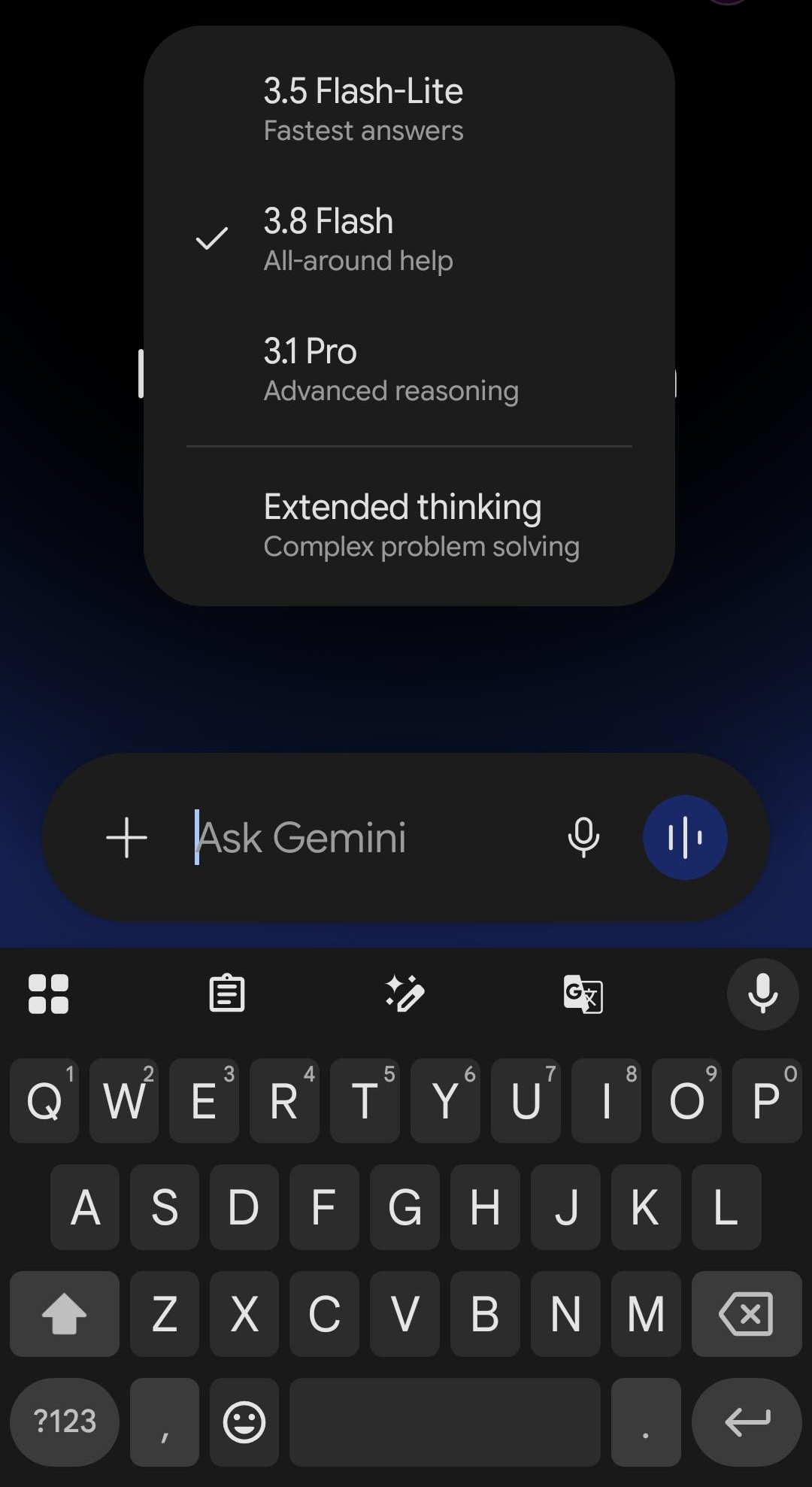
Download Google Gemini 3.8 Flash APK
Google Gemini 3.8 Flash and 3.8 Flash Cyber Update for Android from Play Store and Apple iOS from App Store.
- Download Gemini from Play Store (Android)
- Download Gemini from Apple App Store (iOS)
- Gemini Browser
- Join Telegram Channel
Meet Expressive Launcher — A Fresh Way to Android
The wait is over. Expressive Launcher has graduated from beta and is now stable and available to everyone on the Google Play Store. Download it today and experience a fresh way to customize your Android home screen.
Get started
