
Side Yard Security Camera Blind Spots Most Homes Still Miss


Subscribe for Updates
While front-door cameras and video doorbells have become the gold standard for home protection, they often create a false sense of total security. Most homeowners prioritize the visible entrance where guests and packages arrive, unwittingly leaving side yard paths—those narrow, dimly lit stretches between the house and the fence—completely exposed. This common oversight creates a significant security gap, offering a discreet route for intruders to bypass primary surveillance and reach more vulnerable entry points like basement doors or ground-floor windows.
Fix side yard security camera blind spots before they become security gaps
A front door camera can make a home feel covered, but that feeling depends on one quiet assumption: the person actually walks up to the front door. In many homes, they do not have to. A side gate, fence line, or narrow strip beside the air-conditioning unit can offer an easier route, and that is where security camera blind spots often begin.
That route is easy to overlook because a side yard rarely looks like a security problem. It looks like a trash-bin path, a utility run, or a thin lane between siding and fence boards. Once a camera is involved, the small details start to matter: a wall cuts the angle, shrubs creep into view, a gate swings across the lens, and bright sun can turn the far corner into glare. The driveway view may still look fine while the turn toward a side door stays unclear.
That is why the side yard needs more than leftover coverage from the front or backyard camera. Start with the walking path, gate, door-side corner, and the point where someone enters or leaves the frame. If most of the image is lawn, siding, or fence, the camera may be recording without covering the route that matters.
Why security camera blind spots happen
Most outdoor camera blind spots begin with geometry, not weak hardware. A camera sees a shaped slice of space. Even with a wide lens, the wall, fence, shed, gate post, or corner still owns part of the view. That is why a front-wall camera can give a clean porch image and still leave the side return barely visible.
Height is easy to misjudge in a narrow lane. Set the camera too low and the first thing it learns is the wall base, fence boards, or bins near the lens. Put it too high with a steep downward tilt and the clip may show that someone passed through, but not enough detail to be useful. A few inches can change the whole frame.
The corner is usually the awkward part. Someone moving from the front yard may appear for a second and then slip behind the side of the house. From the backyard direction, the same person may not appear until they are already near a side door or window. On side yards, the turn often tells more than the straight stretch.
Installation day is only a snapshot. Bare branches fill out, storage bins move, snow piles up, and a grill that was not there in March may sit in the frame by July. Light shifts too, especially between tall walls where the image moves from harsh sun to deep shade. If the camera uses solar charging, the best viewing angle still needs enough sun to make sense.
Privacy draws the other boundary. A sharper angle is not a better one if it looks into a neighbor’s window, patio, or side entrance. Keep the side yard camera tight to your own walkway, gate, fence line, and door-side corner.
What side yard blind spots can put at risk
The side yard is not where guests usually arrive, which is exactly why it gets missed. It may hold trash bins, garden tools, bikes, utility meters, or the overflow route for packages. The same lane may lead to a backyard gate, basement door, garage side door, pool equipment, or ground-floor windows. Without coverage there, movement can pass between the front and backyard cameras with no clear middle clip.
That missing middle can matter later. The front camera might show someone leaving the porch view. Minutes later, the backyard camera catches motion near the gate. Without a side yard view, the story has a blank space right where the route changed.
Many homeowners assume the front camera sees anyone approaching the house. That works only when every usable route crosses the front view. Corner lots, shared driveways, alleys, side gates, and fenced yards often create a second path. Sometimes it is just a narrow opening beside a hedge or storage area.
Bad side-yard placement can create the wrong kind of activity. A camera pointed at moving shrubs, a busy sidewalk beyond the fence, or a neighbor’s driveway may send plenty of alerts while missing the gate latch. Aim for the places where a person slows down: the walking lane, the door-side turn, the gate, and the transition into the backyard.
Keep side yard coverage separate from backyard security camera placement. A backyard camera usually watches a patio, pool, deck, or open lawn. The side yard has a different job: passage, corners, and narrow approaches. If you are comparing weather-ready options for those outdoor zones, the outdoor security cameras collection is the more useful starting point. Asking one camera to handle both spaces often leaves one of them thinly covered.
How to reduce side yard blind spots
Use the side yard walk-through as a quick placement checklist. The goal is to catch the route people actually use, then remove the small things that make that route disappear on camera.
- Walk the route first. Start at the sidewalk or driveway, pass the side gate, then come back from the yard toward the front. Stop where the path bends, narrows, or where someone would pause to open a gate.
- Choose the main angle. In many side yards, the front-side corner of the house is a sensible starting point. Aim down the lane toward the gate or backyard transition, and mount high enough to see over bins and low plants without turning faces into the tops of heads.
- Test a reverse view. If the first angle feels cramped, try a backyard-side corner looking forward or another structure that can see the gate from the opposite direction. Long fence lines, dense plants, hidden posts, and sharp turns are signs that one view may not be enough.
- Set activity and privacy zones. Favor the route where a person would walk or pause, then cut away motion outside your property. The best frame is not always the widest one.
- Clear the view before it changes. Trim branches near the lens or motion zone, then check fast-growing shrubs after spring growth and again before winter weather changes the scene.
- Test power, weather, and night clips. For battery or solar cameras, check coverage and charging before final mounting. Review footage in daylight, at dusk, and at night, and make sure alerts arrive before a person has already left the frame.
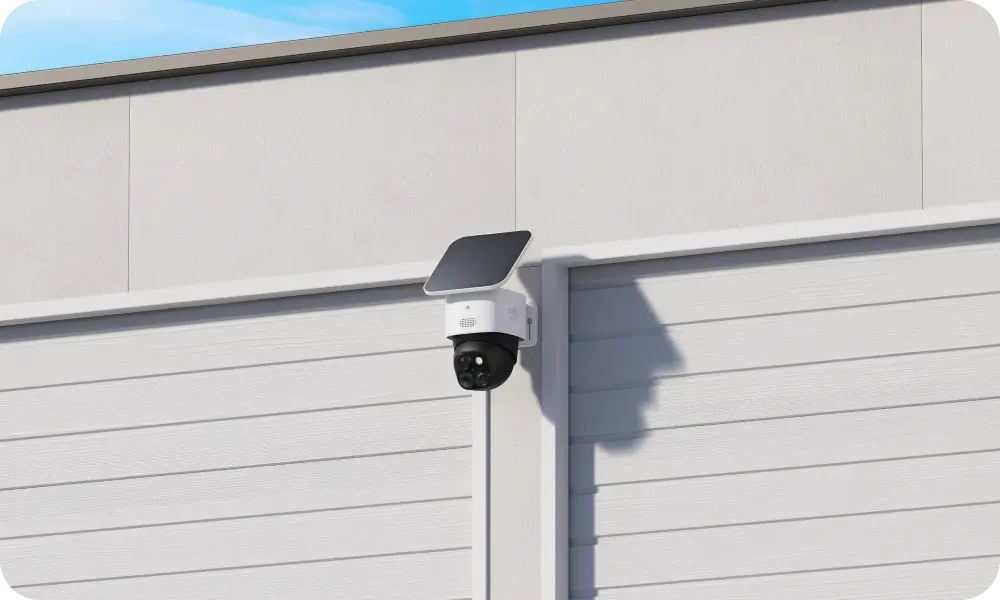
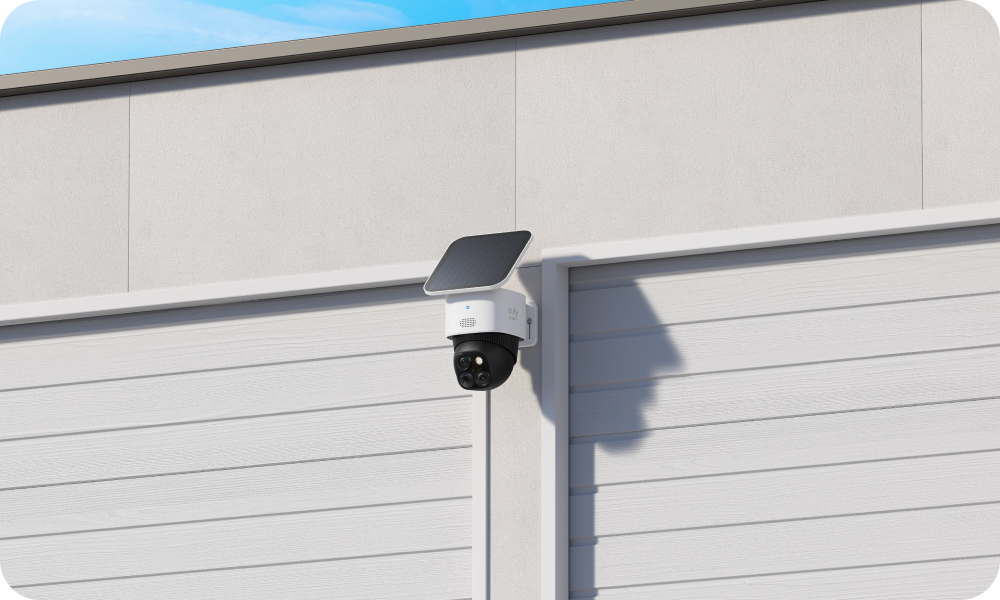
Side yards ask a lot from one camera, especially when the near approach and the fence line both matter. The eufy SoloCam S340 is a reasonable fit for that kind of space because eufy describes it with dual-camera 3K clarity, up to 8x zoom, 355° surveillance, and AI-powered tracking. The wire-free design and removable solar panel are practical when wiring the side of the house would be messy, though solar performance still depends on actual sunlight. Local storage without a monthly fee is useful for routine clips. Still, placement does the hard work. No camera sees through walls, dense plants, or a closed fence line.
Whole-home coverage works better when each camera has a narrow job. For a broader front-to-back plan, the security camera collection can help compare options without forcing one device to solve every angle.
Conclusion
Security camera blind spots are part of real houses. Corners, walls, plants, gates, bins, and changing light all interrupt the view. The side yard exposes those limits quickly, because a front door camera can look excellent and still miss the narrow path beside the house.
Start with the path people actually use. Set the height, angle, power plan, and privacy boundaries around that path, then recheck the view when plants grow or seasons change. If the route still disappears at the turn, treat that as a coverage gap rather than a tilt problem.
A side yard security camera will not remove every blind spot. It can give a clearer record of the route between the front door and backyard, though, and that is the stretch many homes leave uncertain.
Meet Expressive Launcher — A Fresh Way to Android
The wait is over. Expressive Launcher has graduated from beta and is now stable and available to everyone on the Google Play Store. Download it today and experience a fresh way to customize your Android home screen.
Get started
